


One of the most common and serious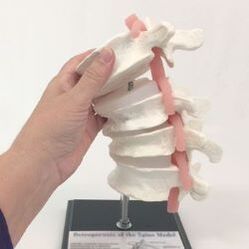 pathologies found among modern residents are lumbar osteochondrosis.It is caused by increased physical activity, sedentary work, unbalanced diet, disturbance of sleep and wakefulness, wearing uncomfortable shoes and other risk factors.The main danger of this disease is the appearance of severe pain, a feeling of stiffness and a gradual loss of motor activity in the spine and lower limbs.
The medical center carries out a complete diagnosis of the condition of the spine and implements effective treatment procedures to cope with the pathology without further complications.Our main way to fight dystrophic-degenerative changes is shock wave exposure.In advanced forms of the disease, we perform surgical intervention.All procedures are performed under the guidance of neurologists and physiotherapists of the highest category and using modern equipment.
What is lumbar osteochondrosis?
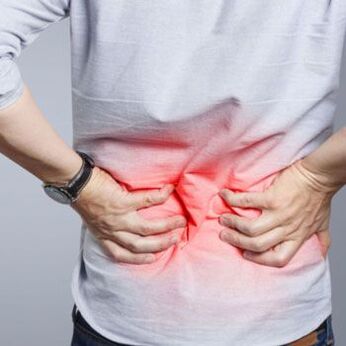
The most common pathologies associated with the musculoskeletal system include osteochondrosis of the lumbar spine.This disease is characterized by the appearance of degenerative-dystrophic changes in the area of bones and joints.Despite the fact that pain due to osteochondrosis in the lower back is localized in a clearly defined area, it can spread to other organs and disrupt a person's usual lifestyle.Degenerative changes can also limit the function of the lower limbs.
Do not attempt to treat lumbar osteochondrosis on your own.This can cause serious complications in the body and significantly worsen the condition of the spine.In this article, we will tell you in detail how to treat lumbosacral osteochondrosis.
Causes of lumbar osteochondrosis
When the load on the musculoskeletal system is incorrectly distributed, this becomes one of the key factors in the occurrence of osteochondrosis.As a rule, such disorders occur due to a "sedentary" lifestyle, regular transportation of heavy objects, as well as when sleeping in an uncomfortable position or when wearing high-heeled shoes every day.

Risk categories also include older people;women during pregnancy;office workers and people involved in professional sports activities.
Osteochondrosis of the lumbar spine can also be caused by the following factors:
- Inflammatory processes in the musculoskeletal system;
- Trauma and injuries to limbs and spine;
- Disorders of the gastrointestinal tract;
- Prolonged physical activity;
- Psycho-emotional overload;
- Infection of internal organs;
- Displacement of intervertebral discs;
- Circulatory disorders in the spine;
- Limitation of joint mobility due to soft tissue damage;
- Presence of herniated intervertebral discs;
- Disorders that develop due to toxic substances entering the body;
- Metabolic disorders;
- Physical inactivity;
- Scoliosis;
- Poor nutrition;
- Overweight;
- Pathological conditions that occur due to dehydration of the body;
- Inadequate supply of oxygen and calcium;
- Joint diseases;
- Abuse of alcoholic beverages and tobacco products;
- Disorders associated with aging of the body.
Symptoms of osteochondrosis of the lumbar spine

Since osteochondrosis of the lumbar spine in the initial stage is not accompanied by pronounced symptoms, it can be quite difficult to choose a treatment.It all depends on the degree of damage to the tissues of the spine.
In the initial phase, patients notice slight discomfort, which, as the disease progresses, may be accompanied by acute pain.In advanced stages, pain syndrome is observed with increased intensity, which limits a person's motor activity.Therefore, when a patient is diagnosed with lumbar osteochondrosis, treatment must begin as early as possible.This will avoid serious consequences in the future.
The following symptoms of lumbar osteochondrosis in men and women are noted:
- Pain syndrome.This is the most striking sign of the disease.The intensity of pain may increase gradually during physical activity or increased stress.It should be noted that in advanced forms this pathological process can be accompanied by unbearable pain;
- Limitation of mobility.Degenerative processes in the spine can provoke a decrease in motor activity: a person bends with great effort, it becomes difficult for him to turn his body and sit with a straight back;
- Impairment of limb function.First of all, a person feels weakness in the leg muscles, and his gait changes.Sensation in the lower extremities may also disappear and a tingling sensation may occur;
- Change in skin color.Due to poor circulation in the affected area, the skin becomes pale;
- Sexual dysfunction (occurs in advanced forms of the disease).
Types of lumbar osteochondrosis
This disease has several varieties, depending on the intensity of pain:
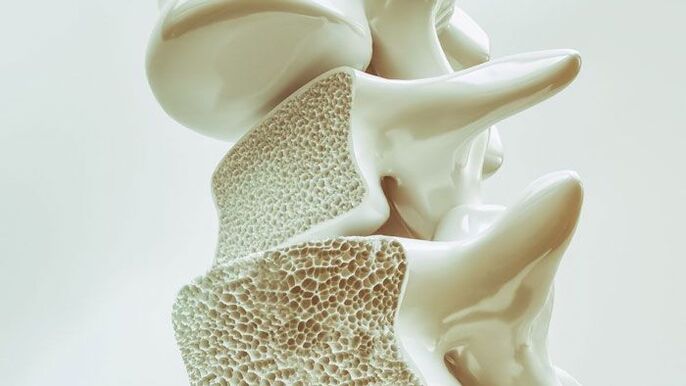
- Lumbago.Accompanied by acute pain syndrome.Characterized by inability to move and sudden shooting pains.Appears when nerve endings and intervertebral discs are compressed, injured and muscle contractions (cramps);
- Sciatica.This pathology is characterized by severe pain that occurs in the lower back and sacrum and spreads to the pelvis.Severe pain radiates to the sciatic nerve, limits the processes of extension and flexion of the body, prevents the adoption of "standing" and "sitting" positions without discomfort;
- Lumbodynia.It is characterized by a long-lasting aching pain syndrome, which occurs against the background of tendon stretching, extrusion of the core of the intervertebral disc and other degenerative processes in the musculoskeletal system;
- Radiculopathy.The characteristic signs of this disease are: the impossibility of motor activity and loss of sensitivity in nerve endings.Patients also note pain in the lower abdomen, lack of muscle tone, loss of reflexes and tingling;
- Discogenic lumbar osteochondrosis.There is loss of sensation in the lower limbs and back, as well as in the gluteal area and abdomen.In some cases, general weakness, frequent urination, weight loss and fever occur.
Stages of development of lumbar osteochondrosis
The above pathological process is characterized by four stages of development.In addition, if a patient is diagnosed with osteochondrosis of the lumbar spine and symptoms of this disease are observed, the treatment must be selected taking into account the severity of tissue destruction.
Currently, there is the following classification of the disease:
- Osteochondrosis of the first stage.Characterized by the appearance of slight discomfort in the lower back.Painful manifestations may occur after heavy physical work or prolonged sports training.As a rule, patients indicate minor discomfort and stabbing pains in the gluteal and lumbar region;
- Osteochondrosis of the second stage.Unpleasant sensations become more pronounced.Destructive processes manifest in the area of the outer shell of the intervertebral disc.The space between the vertebrae is stretched or narrowed, and the disc itself begins to protrude beyond their boundaries.Also at this stage there is compression of the nerve endings, which is accompanied by severe pain in the lower back.In addition, pain can spread to the gluteal area and the ankle area.Another sign of the disease in the second degree is numbness or the appearance of a burning sensation;
- Osteochondrosis of the third stage.Accompanied by complete destruction of the fibrous ring and the formation of an intervertebral hernia.In this case, the process of compression of nerve endings becomes more pronounced, pain syndrome with increased intensity and inflammation appears;
- Osteochondrosis of the fourth stage.It is characterized by the occurrence of atrophic processes in the area of cartilaginous structures and pathological formation of bone tissue.Despite decreasing pain, this does not indicate the patient's recovery.On the contrary, the mobility of the vertebrae is significantly limited, which can subsequently lead to a complete loss of working ability.
How to treat exacerbation of pain due to lumbar osteochondrosis?
The patient's condition may worsen due to thermal exposure, lifting heavy objects or sudden movements.It should be noted that the disease has a double nature: acute pain syndrome can appear unexpectedly or increase as the destructive process develops.As a rule, acute pain with increased intensity is characteristic of the exacerbation stage.In this case, muscle spasms occur in the chest and lower back, which limits the mobility of the back.

Manifestations of pain can also radiate to the gluteal region and lower extremities, which are connected to the damaged area of the spine by long processes of neurons.As a result, a person tries to take a gentle position that minimizes discomfort.In such a situation, even the smallest movements can provoke a new attack of pain.
Lumbar osteochondrosis of the spine, if treatment was started in time, can be stopped within 1-2 weeks.
The medical center will help relieve acute pain syndrome at any time of the day.In order to make a precise diagnosis, we carry out X-ray and ultrasound diagnostics.After relieving the discomfort, our experienced specialists will help you choose the most effective treatment measures.
Complications of osteochondrosis of the lumbar spine
Any negative consequences after an illness are caused by the presence of a formed intervertebral disc herniation.Myelopathy of the spinal cord poses a particular danger;even surgical intervention cannot always cope with it.Its characteristic features are: disturbances in the processes of emptying the bladder and rectum.Also undesirable manifestations of the pathology include compression of the spinal roots, accompanied by acute pain in the lower back.In addition, the following complications may occur:
- The appearance of a herniated disc, protrusion;
- excess salt in the body;
- Complete loss of motor activity in the lower limbs;
- Inflammation of the spinal cord roots (radiculitis) of a chronic nature.
Diagnostic measures
The diagnostic process for suspected osteochondrosis includes several stages and begins with an initial consultation with a specialist, where the following information is clarified:

- The patient's complaints are analyzed.It is determined in which area pain and other signs of illness are concentrated;
- The duration, frequency and nature of the discomfort are clarified;
- The period of appearance of primary signs of pathology, the regularity of pain attacks and risk factors are established;
- Human way of life.The doctor finds out what field of activity the patient is engaged in, what kind of stress he is exposed to on a daily basis, whether he participates in sports activities, lifts heavy objects and performs physical work for a long time;
- Analysis of medical history.The rheumatologist clarifies which pathological processes the patient has suffered in the past.
Next, the doctor begins an external examination of the patient.In this case, special attention is paid to the anatomical features of the limbs and torso in relation to the spine.He also finds out if there are changes in the patient's posture and the condition of the skin.
In the final phase of the external examination, the rheumatologist determines the degree of damage to the roots.To do this, the following actions are implemented:
- Lasègue's symptom.The patient is advised to assume a supine position.Then he must lift his legs one by one, bending them at the knee joint.If pain occurs in the lower back while performing these exercises, this indicates a positive result;
- Wasserman's sign.The patient is placed on the stomach and moves the lower extremity to the side to the maximum angle.If a pathological process occurs, discomfort immediately appears in the frontal region of the thigh and in the groin;
- Neri's symptom.The patient is asked to move the head sharply back or tilt it forward.If, after these manipulations, pain occurs in the lower back, we can judge the presence of this symptom;
- Dough symptoms.The patient is advised to tighten the abdominal area.Pain in the spine indicates the presence of lumbar osteochondrosis.
To clarify the diagnosis, the patient is recommended to undergo an MRI procedure.During this diagnostic process, the specialist is able to determine the presence or absence of malignant neoplasms and bone pathologies.A limitation of the study is the presence of mental disorders in the patient.CT makes it possible to obtain fairly accurate and reliable information about the disease.X-rays are performed only in advanced forms of the disease, when the bone tissue of the spine has undergone significant destruction.
Treatment of lumbar osteochondrosis
A neurologist is responsible for diagnosing the patient and prescribing the necessary treatment procedures.If this destructive-degenerative process is accompanied by pain of increased intensity or disturbances in the functioning of any internal system, the opinion of doctors from other specialties may be required.
To clearly understand how to treat lumbar osteochondrosis, it is enough to imagine the following scheme: performing diagnostic measures, clarifying the degree of progression of the pathology, identifying the consequences for the body.Taking into account the information obtained, the need for surgical or conservative procedures is determined.
Our medical center employs experienced neurologists and physiotherapists who can make an accurate conclusion about the presence of osteochondrosis, and also carry out treatment procedures that allow you to achieve reliable and long-lasting results.
Exercise therapy for lumbar osteochondrosis
The effectiveness of physiotherapy for this disease is obvious.However, a set of exercises should be performed by an experienced rehabilitation doctor in a room with special equipment.A prerequisite for carrying out exercise therapy is the absence or weakening of pain in the patient after illness.In addition, the specialist must monitor the patient's condition during training.If discomfort occurs, the teaching is stopped or adjusted.
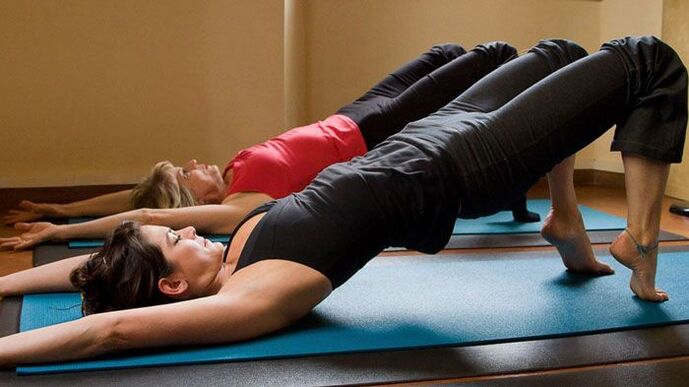
Gymnastics for osteochondrosis of the lumbosacral spine is performed in several consecutive stages.During the warm-up period, exercises are performed to improve blood circulation and warm up muscle tissue.The basic part contains a complex for the area of the spine that has undergone destructive and degenerative changes.In the final phase, relaxation exercises are performed.
As part of therapeutic exercises for osteochondrosis of the lumbar spine, it is recommended to perform the following set of exercises:
- While in the vertical position, it is necessary to bend the whole body in all directions;
- Take a "supine" position and tighten your abdominal muscles, press your spine against the floor surface;
- Place your hands behind your head and stretch up;
- Stand on both arms and legs and move slightly forward, then return to the starting position.Do more repetitions.
Massage for osteochondrosis of the lumbar spine
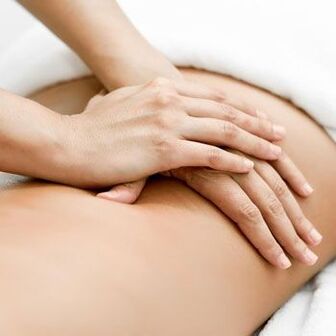
For such problems with the spine, segmental, vacuum, connective tissue and acupuncture massage techniques can be performed.However, the best results can be achieved with a classic massage.
During the procedure, the specialist performs standard movements: kneading, rubbing, stroking, vibration.The main purpose of this method is to relieve muscle spasms, normalize blood circulation in the damaged area and strengthen the musculoskeletal system.
Physiotherapy procedures
The main goal of physiotherapy is to relieve pain, normalize blood flow, saturate cells with oxygen and reduce inflammation.In this case, the following is performed:
- Electrophoresis.Allows you to eliminate the neurological symptoms of the disease;
- Ultrasound exposure along the damaged area of the spine;
- Exposure to magnetic field;
- Diadynamic therapy.To relieve discomfort, currents of different frequencies are used.
In order to achieve maximum results, several physiotherapeutic methods are used simultaneously.
Shock wave therapy for lumbar osteochondrosis
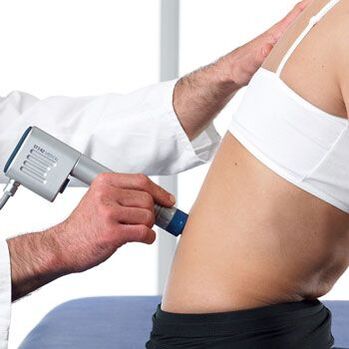
The UVT technique is based on the effect of acoustic impulses of different frequencies.Thanks to this method, it is possible to normalize metabolic processes in the body, trigger natural cell restoration and speed up metabolism.To relieve pain, 1-2 procedures are enough.
After completing the entire course, it is possible to restore the functionality of the intervertebral discs and regenerate their tissue.
If the procedure is performed correctly, the patient can avoid the use of medication and surgery.
We offer shock wave therapy under the guidance of experienced physiotherapists, using innovative Swiss technology and in a comfortable environment.When you visit the doctor's office for the first time, you can also count on a 20% discount.
Medicinal treatment of osteochondrosis of the lumbar spine

It is possible to count on effective and long-lasting treatment results with an integrated approach, namely with the simultaneous use of medication and physiotherapeutic procedures.
As part of drug treatment, the following drugs are recommended:
- Non-steroidal drugs (Ibuprofen, Diclofenac, Nimesulide).Allows you to relieve inflammation and pain;
- Pain-relieving medication.They help to eliminate painful manifestations that cannot be alleviated by the means of the previous group;
- Medicines that reduce skeletal muscle tone (Tizanidine, Tolperisone hydrochloride,).Helps eliminate muscle spasms;
- Agents that ensure the regeneration of cartilage tissue (Glucosamine).Restore tissue in the spine;
- Vitamins (Pyridoxine, Thiamine hydrochloride).Restore immunity, improve the conductivity of nerve cells;
- Agents that help normalize blood flow (nicotinic acid, pentoxifylline).
Surgery
Surgery is considered an emergency treatment for compression of the spinal cord in the case of a hernia.During the procedure, the herniated disc is removed and a procedure is performed to increase the lumen of the spinal canal and minimize compression on the nerve structures.
Frequently implemented methods of surgical intervention include: implantation, intervertebral disc removal procedure, nucleoplasty, stabilization of the spinal motion segment.
Traditional treatment methods
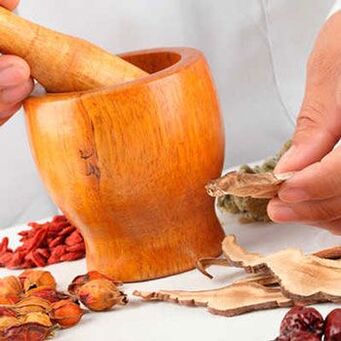
Along with traditional treatment methods, you can use traditional medicine recipes.These include:
- Compresses with mumiyo.Enables tissue regeneration, eliminates inflammation.Before use, it is recommended to dissolve the mumiyo in water;
- Propolis.To achieve the desired effect, it is necessary to make a cake from plant materials.Then apply to the damaged area of the spine and leave it for 24-48 hours until the pain is completely relieved;
- Use of mustard plasters.Provide a warming effect, improve blood circulation, accelerate the flow of nutrients in tissues, eliminate discomfort and inflammatory processes;
Preventive measures and prognosis

If a pathological process is detected in stages 1-2 of development, you can count on a positive prognosis.Symptoms of the disease are easily eliminated through conservative methods, and in young people there is a possibility of tissue regeneration of intervertebral discs.If there are consequences, the prognosis for recovery worsens.Preventive measures include: reducing body weight, avoiding excessive physical activity and improving the functioning of the endocrine system.Neurologists also advise swimming, Pilates, water aerobics and Nordic walking.For sedentary work, it is recommended to take 10-minute breaks.Another important condition to prevent osteochondrosis in the lumbosacral region is to sleep on a bed with an orthopedic mattress.